家族信托 · 2025-12-09
Hong Kong vs Singapore Family Office Tax Incentives: A Comparative Analysis
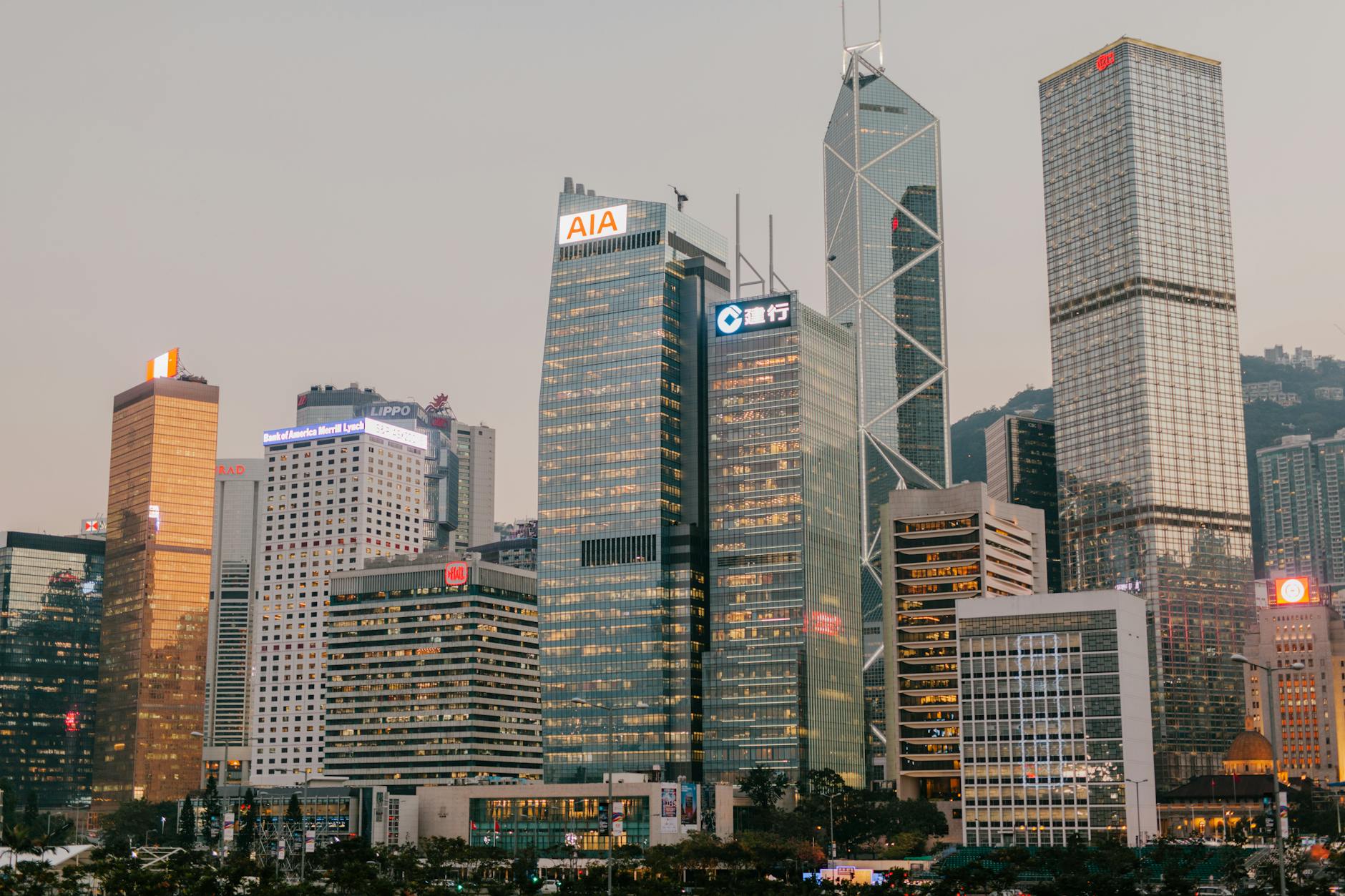
The Hong Kong government’s 2025-2026 Budget, delivered in February 2025, introduced a critical new condition for the existing unified family office tax concession: a minimum aggregate assets under management (AUM) threshold of HKD 240 million for qualifying entities, up from the previously implied threshold of HKD 200 million under the earlier “Family Office Tax Concession” regime. This adjustment, coupled with Singapore’s recent extension of its Variable Capital Company (VCC) tax incentive schemes under Section 13O and Section 13U of the Income Tax Act 1947 to 31 December 2029, has created a renewed urgency for ultra-high-net-worth (UHNW) families to recalibrate their jurisdictional strategies. The competition between Hong Kong and Singapore for family office capital is no longer about generic “lifestyle” appeal; it is a precise contest of statutory frameworks, operational costs, and regulatory certainty. For a family managing USD 50 million in liquid assets, the difference in effective tax rates and compliance overhead between the two hubs can translate to a variance of over USD 500,000 per annum in net savings. This analysis provides a data-driven, rule-by-rule comparison of the current tax incentive regimes in both jurisdictions, focusing on the structural mechanics that matter to principals and their advisors.
The Core Tax Concession Structures: Section 88U vs Section 13O/13U
The foundational difference between Hong Kong and Singapore’s family office tax regimes lies in their legislative architecture. Hong Kong’s unified concession, codified under Section 88U of the Inland Revenue Ordinance (Cap. 112), was fully enacted in May 2023 and applies to a “family-owned investment holding vehicle” (FIHV) that is managed by a single family office (SFO). Singapore’s regime operates through two primary tiers under the Income Tax Act: Section 13O for smaller funds (typically below SGD 50 million) and Section 13U for larger funds (SGD 50 million and above), both administered through the Monetary Authority of Singapore (MAS) and requiring the fund vehicle to be a VCC or a similar regulated structure.
Hong Kong: The Single Family Office (SFO) Model Under Section 88U
Under Section 88U, the qualifying vehicle must be a “family-owned investment holding vehicle” that is wholly owned by one family, with the family office (the “SFO”) managing no more than one FIHV. The Inland Revenue Department (IRD) has provided specific guidance in Departmental Interpretation and Practice Notes (DIPN) No. 61, clarifying that the SFO must be a private company incorporated in Hong Kong, and the FIHV must be a corporation, partnership, or trust. The key operational requirement is that the SFO must employ at least two “qualified” full-time employees in Hong Kong, each earning a minimum annual salary of HKD 2 million (approximately USD 256,000). This is a hard floor: as of the 2025 Budget, the government confirmed no relaxation on this headcount requirement, despite industry lobbying for a reduction to one employee.
The tax concession provides a 0% profits tax rate on the “assessable profits” derived from qualifying transactions and incidental transactions of the FIHV, provided the total assets under management of the FIHV do not exceed HKD 240 million. For AUM above this threshold, the concession applies only to the portion of profits attributable to the first HKD 240 million. This cap is a critical differentiator from Singapore’s regime, which has no such AUM cap on the tax-exempt profits. The concession is valid for two years from the date of election, with an option to renew, but the IRD requires an annual declaration of compliance.
Singapore: The VCC-Based Regime Under Sections 13O and 13U
Singapore’s regime, as extended by the MAS in its 2024 review, offers a more granular structure. Section 13O applies to a “fund” that is a VCC or a trust with a minimum AUM of SGD 20 million (approximately USD 15 million) at the point of application, and the fund must be managed by a Singapore-based fund manager holding a Capital Markets Services (CMS) license or an exempt fund manager. The tax exemption covers “specified income” from designated investments, including stocks, bonds, and derivatives, with no cap on the exempt amount. The key local spending requirement is a minimum of SGD 200,000 per annum in local business expenditure, which includes salaries, rent, and professional fees.
Section 13U, for larger funds, requires a minimum AUM of SGD 50 million and a minimum local business expenditure of SGD 1 million per annum. Critically, Section 13U does not require the fund to be a VCC; it can be a company, trust, or limited partnership. However, the fund must have at least three Singapore-based investment professionals, each earning a minimum of SGD 3,500 per month (approximately USD 2,600), a far lower salary threshold than Hong Kong’s HKD 2 million requirement. This structural flexibility and lower operational cost are often cited by family offices as the primary advantage of Singapore over Hong Kong.
Operational Requirements and Cost-of-Compliance Analysis
The operational burden of establishing and maintaining a family office in either jurisdiction extends beyond tax rates. The cost of compliance, including regulatory filings, audit fees, and professional advisory, forms a significant part of the total expense for a family office managing USD 50-100 million. A 2024 study by the Private Wealth Management Association (PWMA) in Hong Kong estimated the average annual compliance cost for a single family office in Hong Kong at HKD 1.8 million (USD 230,000), while a comparable 2024 survey by the Singapore Wealth Management Institute (WMI) placed the figure at SGD 280,000 (USD 210,000). The difference is driven primarily by Hong Kong’s higher salary floor for the two required employees.
Hong Kong: The HKD 4 Million Salary Floor
The requirement for two qualified employees each earning HKD 2 million annually creates a mandatory annual salary cost of HKD 4 million (USD 512,000) for the SFO entity. This is a direct cost, not a tax-deductible expense under the concession, as the SFO itself is subject to the standard 16.5% profits tax on its own income. The IRD has confirmed that these employees must be “engaged in the day-to-day management of the FIHV” and cannot be shared with other group entities. For a family with AUM of HKD 240 million (USD 30.7 million), this salary cost represents 1.3% of AUM per annum, a substantial drag on net returns. In contrast, Singapore’s Section 13O requires only SGD 200,000 in total local business expenditure, allowing the family to allocate funds to rent, professional fees, or a single high-salary employee, offering greater flexibility.
Singapore: The MAS Licensing and VCC Setup Costs
Singapore’s regime imposes its own upfront costs. Setting up a VCC requires a minimum paid-up capital of SGD 1 and a licensed fund manager, which typically costs SGD 50,000-100,000 for the initial application and legal structuring. The MAS also requires an annual audit and the filing of an annual return for the VCC, which adds approximately SGD 20,000-30,000 per year. However, the Singapore government offers a co-funding scheme under the Financial Sector Development Fund (FSDF) for up to 70% of the qualifying costs of setting up a VCC, capped at SGD 300,000 per applicant. This subsidy, which is not available in Hong Kong, can significantly reduce the first-year cost for a new family office. The key trade-off is time: Singapore’s MAS application for a Section 13O or 13U incentive typically takes 4-6 months, whereas Hong Kong’s IRD application under Section 88U can be processed in 3-4 months, according to data from the Hong Kong Monetary Authority’s (HKMA) 2024 annual report on family offices.
Jurisdictional Stability and Exit Mechanisms
Beyond tax rates and costs, UHNW families must evaluate the long-term stability of each regime and the ease of exit or restructuring. Both Hong Kong and Singapore have demonstrated a commitment to the family office sector, but their approaches differ in terms of regulatory certainty and political risk.
Hong Kong: The “One Country, Two Systems” Framework and PRC Nexus
Hong Kong’s tax concession is explicitly designed to attract families with a connection to the People’s Republic of China (PRC). The IRD’s DIPN No. 61 clarifies that the FIHV can hold assets in PRC entities, including those structured through Variable Interest Entities (VIEs), provided the holding is compliant with PRC foreign investment regulations. This is a significant advantage for families with substantial mainland Chinese business interests. However, the political risk associated with the “one country, two systems” framework remains a consideration. The 2024 passage of Article 23 legislation under the Hong Kong National Security Law has introduced new compliance obligations for entities handling sensitive data, including family office investment strategies. The SFC’s 2024 circular on cybersecurity and data protection for licensed corporations (LCs) requires family offices that are also licensed under the Securities and Futures Ordinance (Cap. 571) to implement specific data localization measures. For a family office managing assets across Hong Kong, Singapore, and the PRC, this adds a layer of regulatory complexity that Singapore does not impose.
Singapore: The MAS’s Track Record and the VCC Exit Mechanism
Singapore’s MAS has a well-established track record of administering tax incentives, with the Section 13O and 13U schemes having been in place since 2019 and renewed twice. The 2024 extension to 2029 provides a five-year planning horizon. A critical structural advantage of Singapore’s VCC is the ability to “redomicile” or “migrate” the VCC to another jurisdiction under the VCC Act 2018. Sections 66-68 of the Act allow a VCC to transfer its registration to a foreign jurisdiction, subject to MAS approval, providing a clear exit mechanism. Hong Kong’s FIHV, being a standard private company under the Companies Ordinance (Cap. 622), does not have a comparable statutory redomiciliation framework, meaning a family wishing to leave Hong Kong must liquidate the entity and re-establish in another jurisdiction, incurring capital gains tax implications in the process.
Actionable Takeaways for UHNW Families
- For families with AUM between USD 20 million and USD 50 million, Singapore’s Section 13O regime offers a lower cost of compliance (SGD 200,000 vs HKD 4 million in salary costs) and greater flexibility in local expenditure allocation, making it the more efficient choice for capital preservation.
- Families with a significant PRC asset base, particularly those holding VIE structures or onshore Chinese equities, should prioritize Hong Kong’s Section 88U regime due to the explicit IRD guidance on PRC asset holdings and the faster application processing time (3-4 months vs 4-6 months in Singapore).
- The 2025 Hong Kong Budget’s increase of the AUM threshold to HKD 240 million makes the concession less attractive for families managing assets above this level, as the tax exemption is capped; families with AUM exceeding USD 35 million should model the effective tax rate under Hong Kong versus the unlimited exemption under Singapore’s Section 13U.
- The absence of a statutory redomiciliation mechanism in Hong Kong’s Companies Ordinance means families must factor in potential exit costs and capital gains tax implications when choosing Hong Kong, whereas Singapore’s VCC Act provides a clear, MAS-approved pathway for jurisdictional migration.
- Both jurisdictions require a licensed fund manager or a licensed SFO for assets exceeding certain thresholds; families should budget for the initial licensing costs (HKD 100,000-200,000 for an SFC Type 9 license in Hong Kong, or SGD 50,000-100,000 for a CMS license in Singapore) as part of the first-year setup expenditure.